Anisometropia means that vision in one eye is worse than the vision in the other due to a difference in refractive error.
Refractive error is an imbalance between the light-focusing power of the eye and the length of the eye. This leads to blurred images on the retina. Refractive error is expressed as the glasses’ or contact lenses’ strength in diopters required to bring a distance image into focus on the retina.
One commonly used definition of anisometropia is that the difference in correction between your eyes must be greater than 1 diopter.


Anisometropia is treated by correcting your eyesight through glasses, contact lenses or surgery.
Simple Anisometropia:
One eye is affected by either myopia or hyperopia, while the other is normal
Compound Anisometropia:
Both eyes have the same condition but in different degrees
Mixed Anisometropia:
One eye is myopic while the other is hyperopic
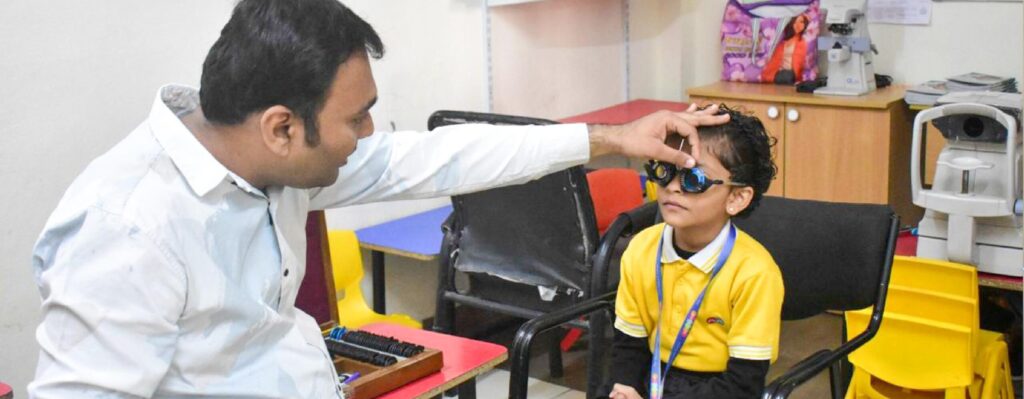
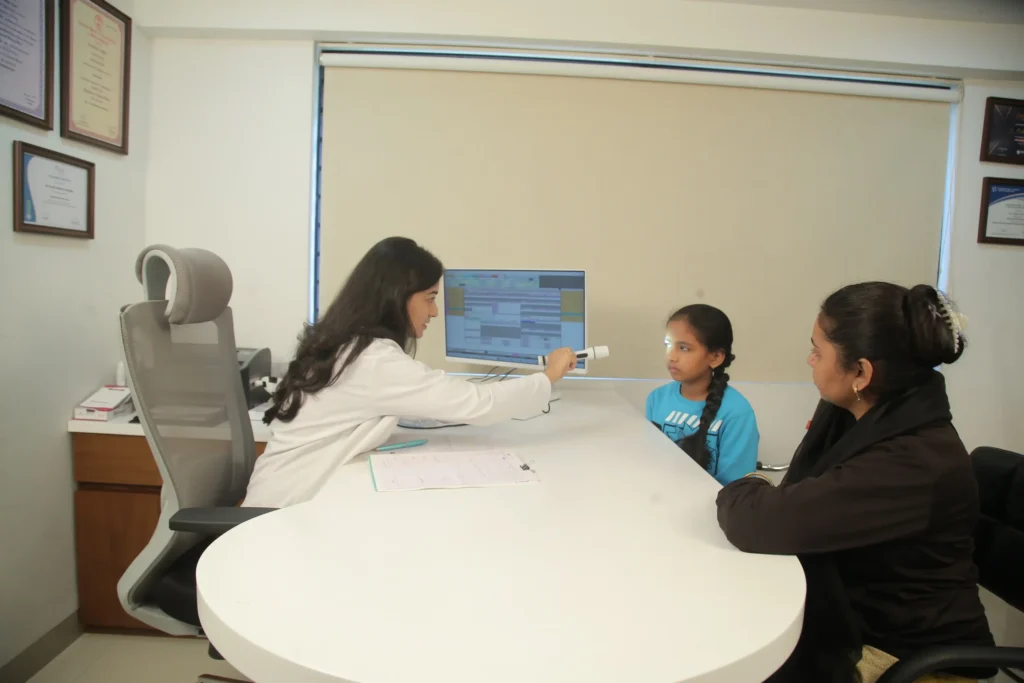
Our specialists conduct comprehensive examinations including:
* Visual acuity testing for each eye
* Cycloplegic refraction
* Corneal topography
* Retinal examination
* Binocular vision assessment
* Stereopsis testing for depth perception
Spectacles:
* Custom-prescribed lenses for each eye
* Special considerations for lens thickness and weight
* Anti-reflective coating options
* High-index materials for improved cosmetic appearance
Vision Therapy:
* Specialized exercises to improve:
* Binocular vision
* Eye coordination
* Depth perception
* Visual processing
Contact Lenses:
* Soft contact lenses for mild to moderate cases
* Rigid gas-permeable lenses for higher prescriptions
* Custom-designed contact lenses
* Extended wear options when appropriate.
*LASIK*
* Customized treatment for each eye
* Advanced wavefront-guided technology
* Precise corneal reshaping
* Quick recovery time
*PRK (Photorefractive Keratectomy)*
* Alternative to LASIK for certain patients
* Suitable for thin corneas
* Long-term stability
* No flap-related complications
*ICL (Implantable Collamer Lens)*
* Ideal for high refractive errors
* Reversible procedure
* UV protection
* Maintains corneal structure
Pediatric Considerations:
* Early intervention is crucial
* Regular monitoring of vision development
* Patching therapy when necessary
* Combined approach with glasses and vision therapy.
Special Considerations:
Children with Anisometropia:
* Early detection is vital
* Regular follow-up appointments
* Compliance with prescribed treatment
* Monitoring for amblyopia development
* School performance assessment.
Our Approach to Treatment:
We provide:
* Individualized treatment plans
* Regular progress monitoring
* Adjustment of treatment as needed
* Patient education and support
* Family involvement in treatment.
Prevention and Management:
* Regular eye examinations
* Early intervention when needed
* Proper eye care habits
* Regular updates of prescription
* Protective eyewear when necessary

Cataract & Refractive surgeon
Copyright © 2024 Rohit Eye Hospital And Child Care Center. All Rights Reserved. Powered by MrSoftwares.in
WhatsApp us